
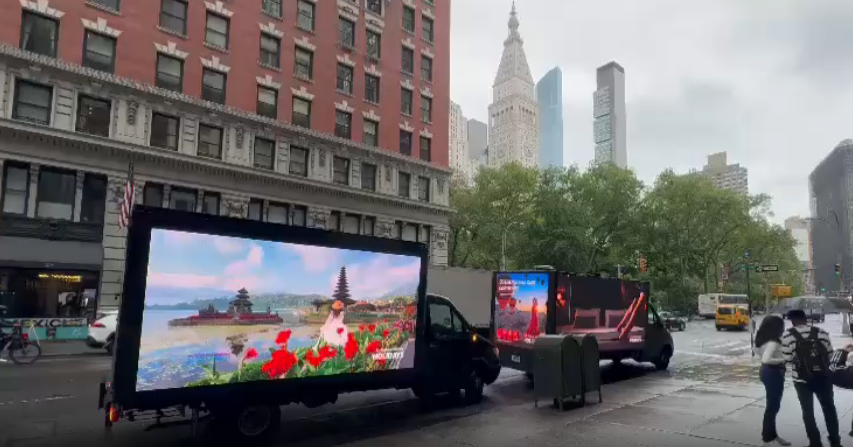
Digital Billboard Trucks
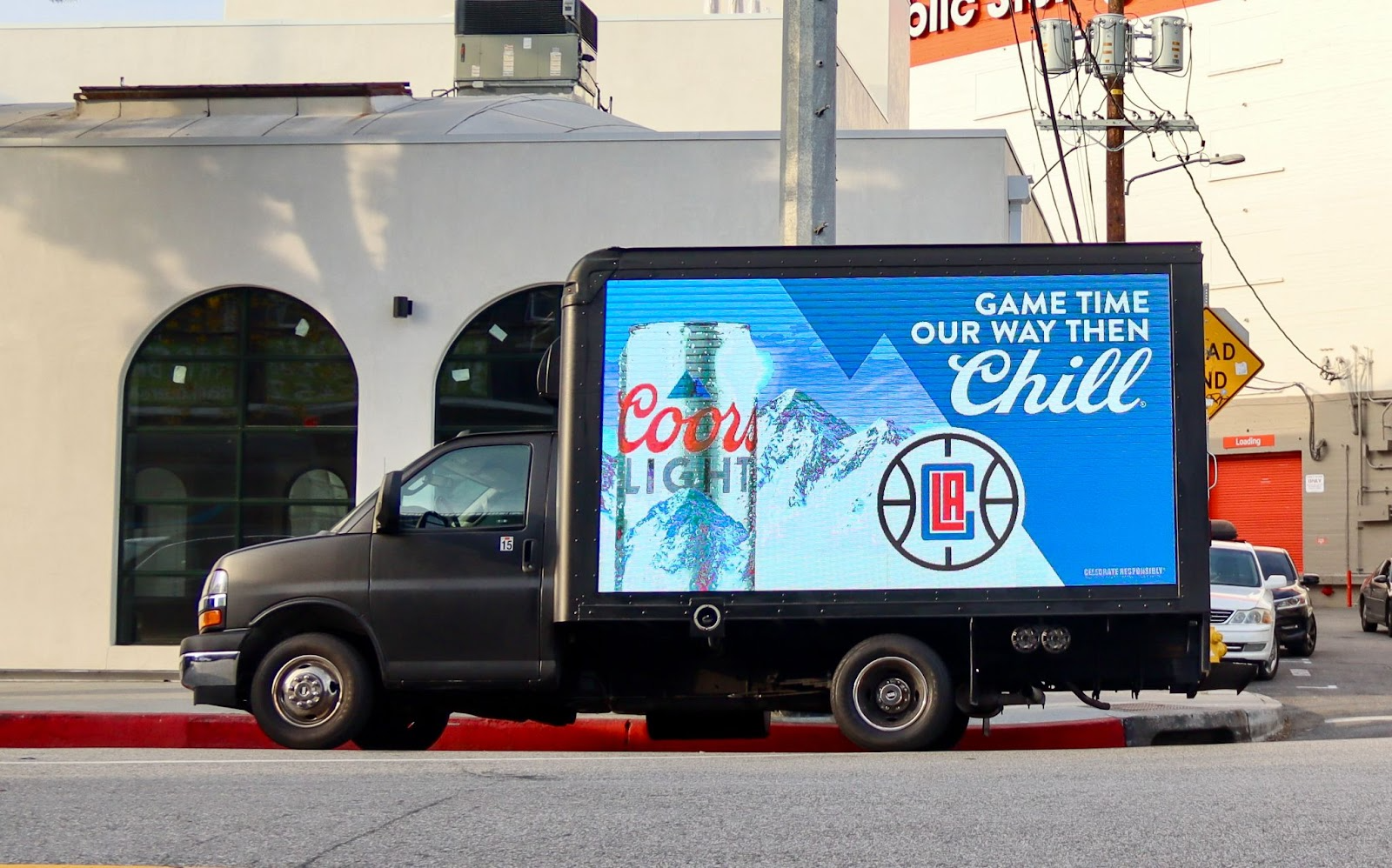

Outdoor advertising remains a powerful channel for reaching audiences in real-world environments, but visibility alone does not guarantee results. When you use a mobile billboard advertising truck, the effectiveness of your campaign depends heavily on how well the route is planned. Without a strategic approach, even high-quality visuals can miss the right audience or fail to achieve meaningful engagement.
Route planning transforms mobile outdoor advertising from a moving display into a targeted communication tool. By aligning location, timing, and audience behavior, you ensure your message appears where it matters most. A well-planned route increases exposure, strengthens brand recall, and improves overall return on investment.
Unlike static billboards, mobile advertising gives you control over movement and exposure. This flexibility allows you to guide your message through high-value locations rather than waiting for audiences to pass by. However, this advantage only works when route planning is intentional and data-driven.
Research from the Outdoor Advertising Association of America (OAAA) shows that out-of-home advertising performs best when placed along routine travel paths such as commuting routes, retail corridors, and entertainment districts. When you apply this insight to a mobile billboard advertising truck, you can actively position your message within daily consumer journeys.
Before mapping routes, you must identify the primary goal of your campaign. Route decisions should directly support that objective.
If your focus is brand awareness, broader coverage across multiple neighborhoods may be more effective. For product launches or limited-time promotions, routes concentrated around commercial centers or event venues deliver stronger impact. When promoting a physical location, proximity becomes the top priority.
Clear objectives guide route length, frequency, and geographic focus, ensuring your campaign remains consistent and measurable.
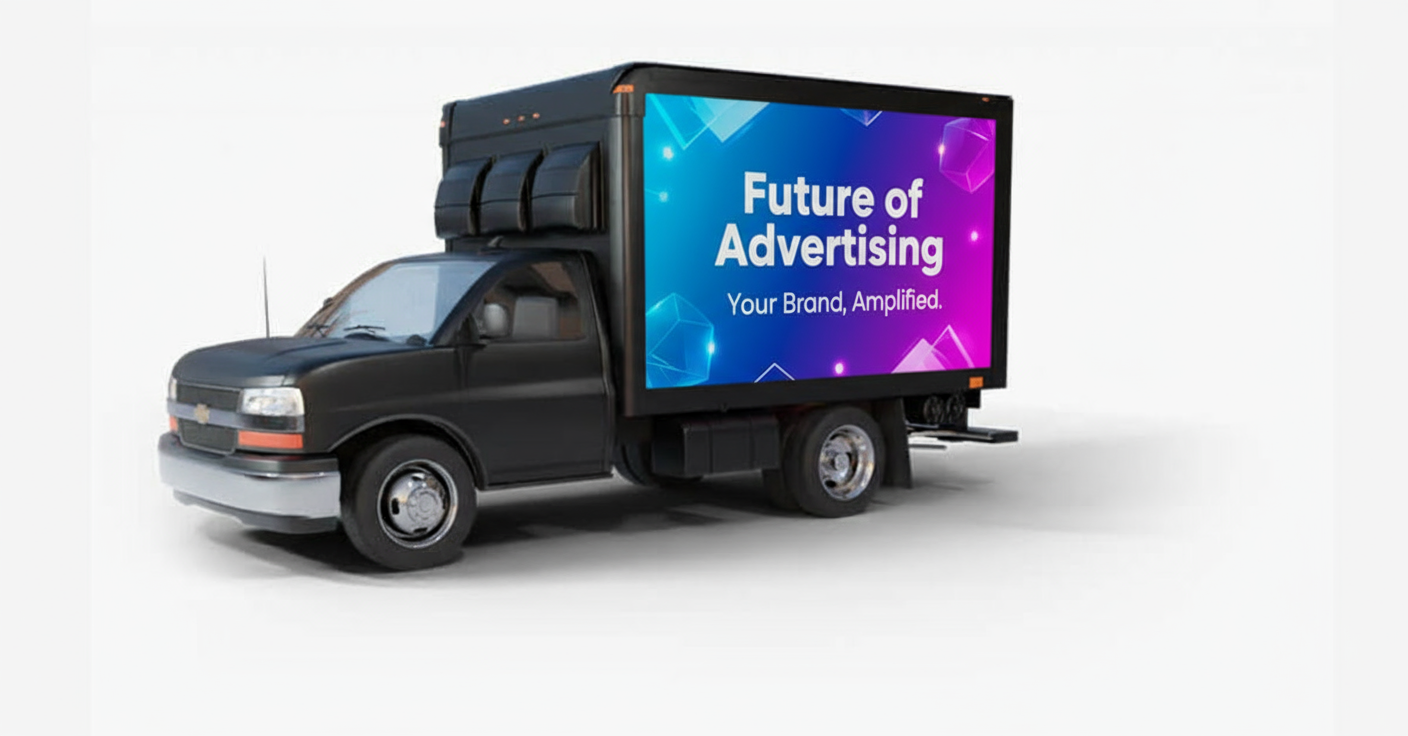
Audience behavior should drive every routing decision. You need to understand where your ideal customers spend time, how they travel, and when they are most active.
For professionals, routes near business districts, transit stations, and office complexes offer higher exposure. For families, residential areas, shopping centers, and community zones may provide better visibility. When targeting younger demographics, entertainment districts, universities, and lifestyle hubs are often effective.
By aligning your mobile billboard advertising truck with real-world movement patterns, you improve relevance and engagement.
Traffic density alone does not guarantee visibility. You should also consider dwell time, which refers to how long viewers can see your message. Areas with slow-moving traffic, traffic signals, pedestrian crossings, and congestion points allow audiences more time to absorb information.
Peak travel hours, such as morning and evening commutes, often deliver higher impression rates. Studies on out-of-home advertising effectiveness indicate that repeated exposure during routine travel increases brand recall and message retention.
Combining traffic volume with dwell time ensures your route maximizes both reach and attention.
Data-driven planning improves accuracy and reduces guesswork. Traffic analytics, GPS data, and municipal transportation reports help identify high-impact streets and intersections. Local event schedules also provide opportunities to reach concentrated audiences during festivals, concerts, and sporting events.
Nielsen research on location-based advertising highlights that ads placed in contextually relevant environments generate stronger recall and purchase consideration. Applying these findings to route planning allows you to position your message where audiences are most receptive.
Exposure frequency plays a major role in campaign success. A single pass through an area may create awareness, but repeated exposure builds familiarity and trust. You should design routes that balance coverage with repetition.
For example, revisiting high-performing areas multiple times per day reinforces your message, while rotating through complementary neighborhoods expands reach. This approach ensures your mobile billboard advertising truck supports both short-term visibility and long-term brand recognition
Timing affects how audiences perceive and interact with your message. Routes planned during optimal hours align your campaign with consumer availability and attention. Weather conditions, holidays, and seasonal behavior should also be considered.
For retail promotions, routes near shopping districts perform well during weekends and evenings. For business-focused campaigns, weekday routes during commuting hours are often more effective. Seasonal adjustments help ensure your message remains timely and relevant.
Route planning must comply with local regulations related to advertising, traffic flow, and parking. Municipal restrictions vary by location, and non-compliance can disrupt campaigns or reduce visibility.
Operational efficiency is equally important. You should account for fuel usage, driver schedules, vehicle maintenance, and route duration. Efficient planning reduces costs while maintaining consistent exposure, ensuring your campaign remains sustainable.
Working with experienced providers helps manage these logistical considerations and minimizes operational risks.
A mobile billboard advertising truck can amplify digital marketing when routes are planned strategically. You can direct audiences to landing pages, social media platforms, or promotional offers by placing your message in areas where people are likely to engage immediately.
QR codes, short URLs, and social handles perform particularly well in pedestrian-heavy zones or slow-traffic areas. This integration bridges offline visibility with online action, strengthening campaign performance across channels.
Route planning should remain flexible throughout the campaign. GPS tracking, impression estimates, and engagement metrics provide valuable insights into which areas perform best. You should review this data regularly and make adjustments as needed.
Refining routes based on performance allows you to focus resources on high-impact locations while reducing exposure in lower-performing areas. This adaptive approach ensures your mobile billboard advertising truck continues to deliver value over time.
While route planning can be done internally, professional expertise adds measurable value. Experienced providers understand traffic behavior, audience dynamics, and regulatory requirements. They use advanced tools and local knowledge to design routes that maximize exposure and efficiency.
Professional planning ensures your campaign aligns with strategic goals, operates smoothly, and achieves consistent results.
Planning a successful route is the foundation of an effective mobile billboard advertising truck campaign. When you combine audience insights, data-driven decisions, and strategic execution, you transform mobile advertising into a targeted and impactful marketing solution.
If you are looking to launch a professionally planned and optimized mobile advertising campaign, you can explore expert solutions at
https://rollingboxmedia.com/